
Home / The CP-100
The CP-100 · V4
A cover for the whole external line.
A single-use, non-sterile, skin-worn device that secures and shrouds the external part of an indwelling PICC or central line, worn over the dressing and securement already in place.
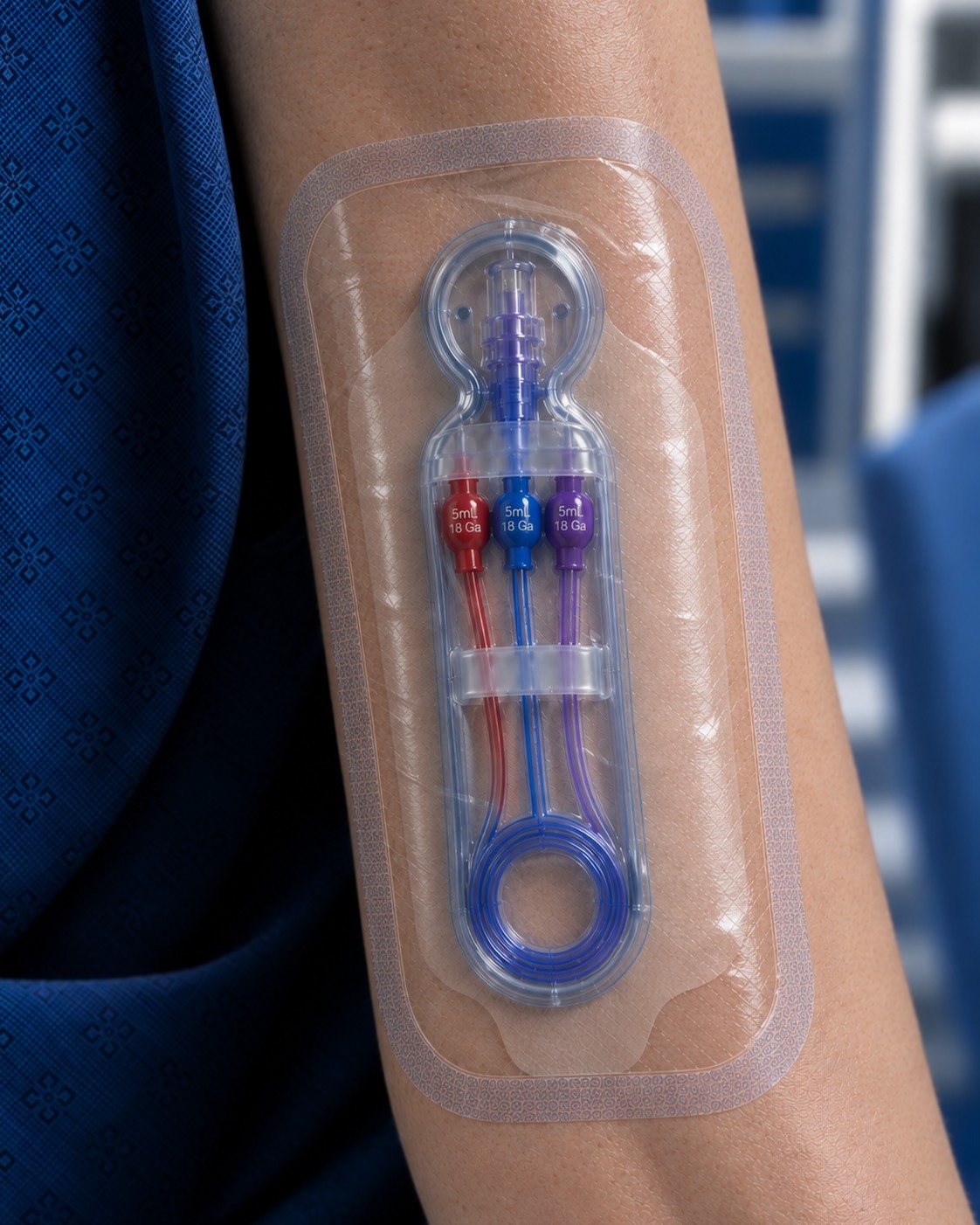 V4 prototype rendering

01 · What it is
Hub, legs, clamps and connectors in one place.
It sits on the upper arm for a PICC, or the neck or chest for a central line. The line is held flat under one cover instead of hanging loose.
"The CP-100 is intended to secure and protect the external portion of an indwelling intravascular catheter (PICC or central venous catheter) to the patient's skin."
Concept render. Patent pending.
02 · How it works
Four jobs, one device.
Each feature addresses a common problem with the external line.
Holds the hub
Holds the catheter hub, designed to take tugs on the tubing away from the insertion site.
Manages the tubing
Holds excess tubing in a managed loop, designed to stop it catching or bending sharply.
Covers the connectors
Covers the end connectors, which stay accessible for flushes and infusions.
Keeps the site visible
A clear window over the insertion site and dressing allows checks without removing the device.
03 · Fits current care
An adjunct, worn on top.
It replaces neither the dressing nor the securement device, and facility line-care protocols stay the same. It can also be used alongside subcutaneous anchors.
CP-100
Worn over both, holding and covering the external line.
Primary securement
Stays exactly as it is today.
Transparent dressing
Placed and changed on its usual schedule.
Skin
Clean, dry and intact. Nothing is threaded over the line.
04 · Fit
Designed for single, dual and triple lumens.
Designed for PICCs sold in the US and comparable central lines. Fit is being validated on leading US PICCs.
Single lumen
One extension leg and connector.
Dual lumen
Two legs, the most common home-care line.
Triple lumen
Three legs, more common in acute care.
05 · How it's used
Applied at a visit the nurse already makes.
Line care as usual
The nurse places the line, the dressing and the securement device exactly as today.
Applied on top
The CP-100 goes over them in a few simple steps. Nothing is threaded over the line.
Worn day and night
It stays on through flushes, infusions, showering and sleep.
Replaced weekly
A fresh device at each routine dressing change. Single-use, never reapplied.
06 · Wear schedule
Changed with the dressing, every week.
At each dressing change
Replaced with the dressing on its regular schedule, typically about once a week for transparent dressings.
Loose or soiled
It lifts at the edges, gets wet underneath, or is visibly soiled or damaged.
Stays in place
Through flushes, infusions, showering and sleep, without removing the device.
Fresh every time
A new device at every change; never reapplied.
Proposed wear schedule. Final instructions for use will be confirmed in the patient and nurse validation study.
07 · Safety
Precautions.
- Apply only to clean, dry, intact skin. Do not place over broken or irritated skin.
- Check the skin under the adhesive at each change for signs of adhesive-related irritation.
- Non-sterile and single-use.
- Remove the device and assess the line if dislodgement is suspected.
- Always used with, never instead of, the primary dressing and facility line-care protocols.
Intended use and precautions are proposed and will be finalized with the instructions for use.
No fluid-path contact
The CP-100 does not connect to the catheter, the connectors' fluid path or the insertion site. Flushes, infusions and blood draws go through the ports as usual.
What we claim
Only what the evidence supports. Until clinical data is available, we describe what the device is designed to do, not outcomes. No infection-prevention claim is made.
Get in touch
Questions about the CP-100?
For clinical or partnership questions, write to the founders directly. We read every message.